

In June 2024, citizens from all European Union Member States will be called to elect their representatives to the European Parliament.
It will be the 10th time such elections have been held since the first direct election to the European Parliament in 1979. It is therefore a fitting occasion to reflect on how Europe’s supranational democracy has unfolded, from the origins of democratic participation on the continent to the step-by-step building of a true European polity.
This time travel is not just an opportunity to get acquainted with things past, but also a way of helping you make an informed choice at the polling station! Democracy is vital; your say is crucial.
The unfolding of democracy in European history
Europe has come a long way in terms of how democracy has developed. For some, the roots of that democracy go back to Classical Athens. For others, the freedoms of the contemporary era are fundamentally different from those of the ancient world because they apply to a whole society, rather than just a segment of it. While in antiquity, democracy was deemed compatible with keeping large groups of people disenfranchised, the Enlightenment’s most advanced ideas stress that democracy must be inclusive.
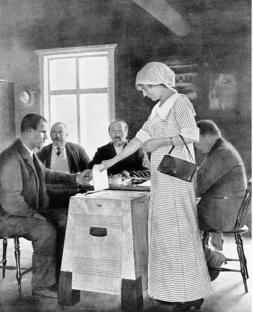
This beautiful notion, though, has often been applied more in theory than in practice. Since the late 18th century, the progress of democracy has been associated with other important causes on the road to greater equality, from the abolition of slavery to the extension of civic rights to both men and women. In the 19th century, nascent democratic legitimacy had to coexist with autocratic regimes. Although multilateralism between autocratic regimes made lasting peace among nations possible on several occasions (Münster/Osnabrück in 1648, Utrecht in 1713, and Vienna in 1815), it would ultimately be at the expense of the people’s fight for greater civic freedoms, such as in the repression that marked the aftermath of the Congress of Vienna in 1815). As the 19th century progressed, the codification of international law and the creation of broader stable international organisations created the conditions for the international spread of the democratic standards that some countries were already testing in the domestic arena. The world was ready for a paradigm shift, where democratic values would take the lead in international systems. Unfortunately, Europe would have to wait for the aftermath of yet another war – World War I – to see most of its countries become democracies.
If one thing is clear today, it is that no election is fully democratic without universal suffrage. In Europe, elections by universal suffrage were first held in the early 20th century, mostly in Scandinavian and other northern European countries. In the rest of Europe, there was sometimes a very long quest for women’s suffrage: in Switzerland it did not become a reality until the 1970s, whereas in Spain and Türkiye it was introduced in the 1930s. The heyday of liberal democracy was also the moment its most serious challenges were unleashed: Nazism and Stalinism thrived on their criticism of the spread of individual freedoms. Thus, the long evolution of democratic elections is also the story of how they incorporate some of societies’ most important causes: women’s rights, the rights of the disenfranchised and, especially after World War II and thanks to the architects of European unity, the promotion of international peace.
Ten elections that shaped our world
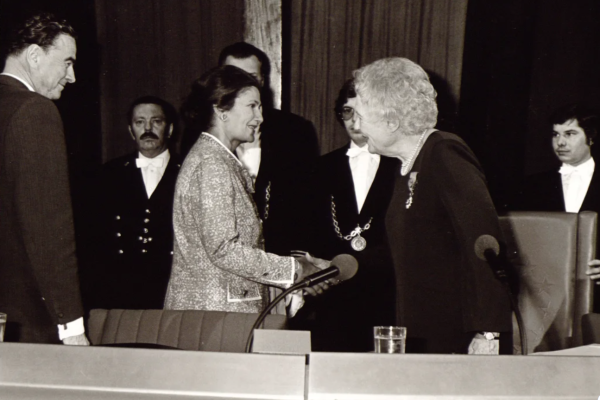
The very first direct European election came about after a long struggle. The mid-1970s were a time of progress for European unity, with the first enlargement of the European Community, the beginnings of European monetary cooperation, and the creation of the European Council.
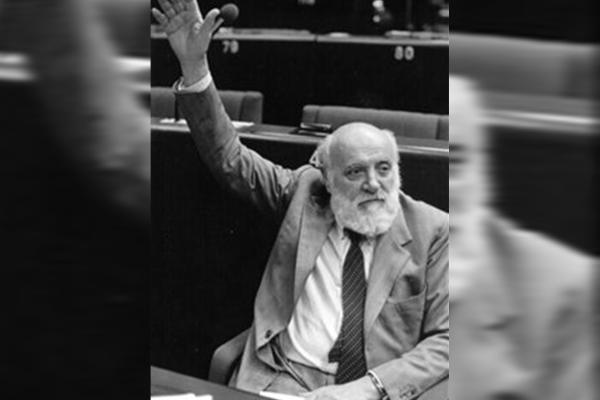
After its first elections, despite its newly gained democratic legitimacy, the European Parliament still had only limited powers. Many people were dissatisfied with this situation, and several outspoken members sought to push for change immediately, if not through legislation, then in practice. For example, broadening the budgetary powers of the chamber became a means of influencing a growing number of policy areas.
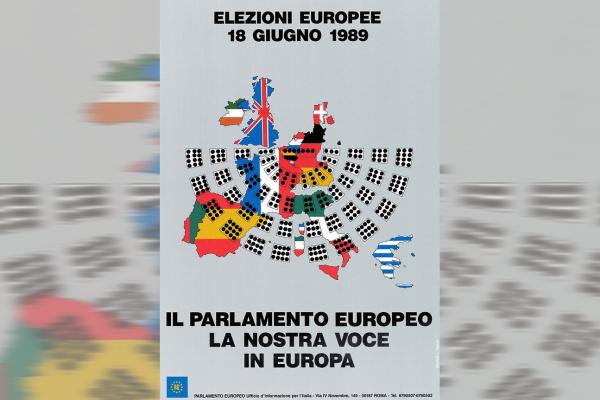
Roughly one year after the Maastricht Treaty came into force, thereby creating the European Union, European citizens were again summoned to vote. Under the new distribution of powers, the European Parliament had greatly increased its standing, now acting as co-legislator on a par with the Council of Ministers.

Roughly one year after the Maastricht Treaty came into force, thereby creating the European Union, European citizens were again summoned to vote. Under the new distribution of powers, the European Parliament had greatly increased its standing, now acting as co-legislator on a par with the Council of Ministers.
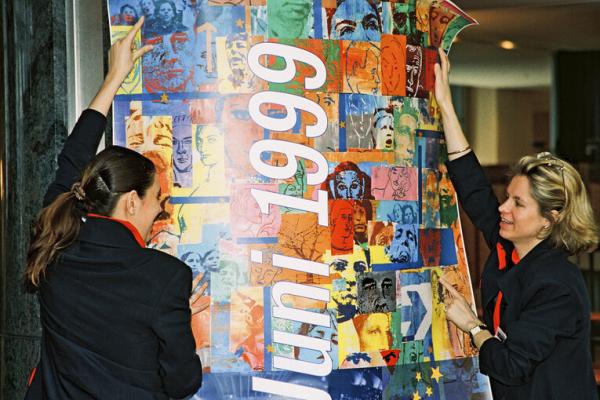
The progress of the single currency was about to bring about something tangible: euro notes and coins. A big bang enlargement had just gained speed with the opening of accession negotiations with 12 candidate countries in 1998.
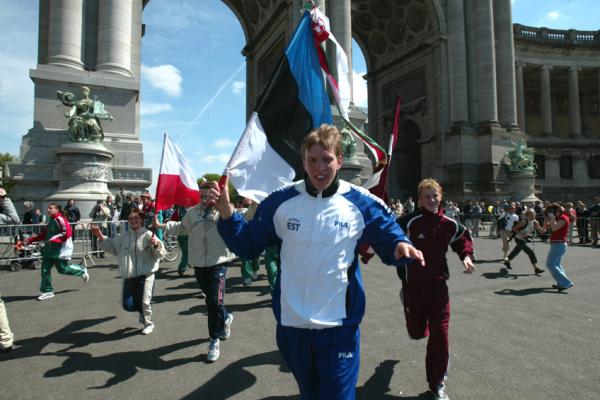
The rift between European countries caused by the war in Iraq needed to be healed, and the EU’s biggest enlargement to date certainly provided a grand narrative to do so. After more than half a century of deep, entrenched division, in 2004 the continent was ready for a reencounter.
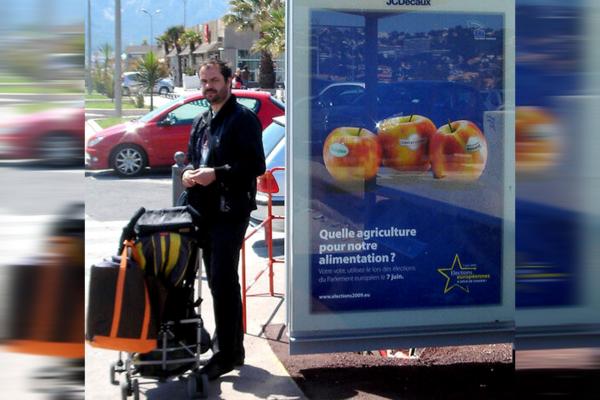
By the time the Lisbon Treaty came into force on 1 December 2009, not only had there been new elections but also a severe crisis had hit the global economy, with serious financial, social and political repercussions.
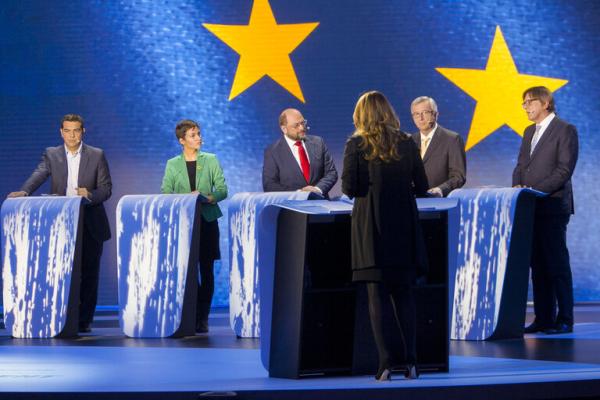
The 2014 election introduced the Spitzenkandidat or lead candidate process: in this system, European political parties nominate their lead candidate ahead of the European elections, allowing for citizens to directly influence the choice of the head of the European executive with their vote in the European elections.

In the election of 2019, the turnout was 51 %. This marked the first increase in election participation since the very first EU elections of 1979 and represented the largest-ever transnational election.
As is apparent from this sequence of all European elections since 1979, the debates and political issues of their time have characterised each European election.